Showing posts with label Nukes Bear. Show all posts

Friday, October 07, 2022

The best lack all conviction

Do you remember that last time I was down in Cardiff I told you that back in June I found myself beginning to suspect that I personally knew someone who was better informed on any specific hot button issue than any member of the dreary commentariat? And that I had determined to start gathering these exemplars together over the months and years into my own new Kitchen Cabinet?

Consider this a formal invitation to join as the fourth member. Your mission, should you choose to accept it, will be German idealism, phenomenology, existentialism (including its antecedents; Kierkegaard, Nietzsche etc.), hermeneutics, structuralism, post-structuralism, and deconstruction.

As always, should you or any of your KC Force be caught or killed, I will disavow any knowledge of your actions. This notion will self-destruct in ten seconds. Good luck.

Result! The author of:

  • The Death and Return of the Author: Criticism and Subjectivity in Barthes, Foucault and Derrida
  • Authorship from Plato to the Postmodern: A Reader
  • The Ethics of Writing: Authorship and Legacy in Plato and Nietzsche

is signed up for Team NickyB.

Piers Morgan must be quaking in his boots.

Wednesday, May 04, 2022

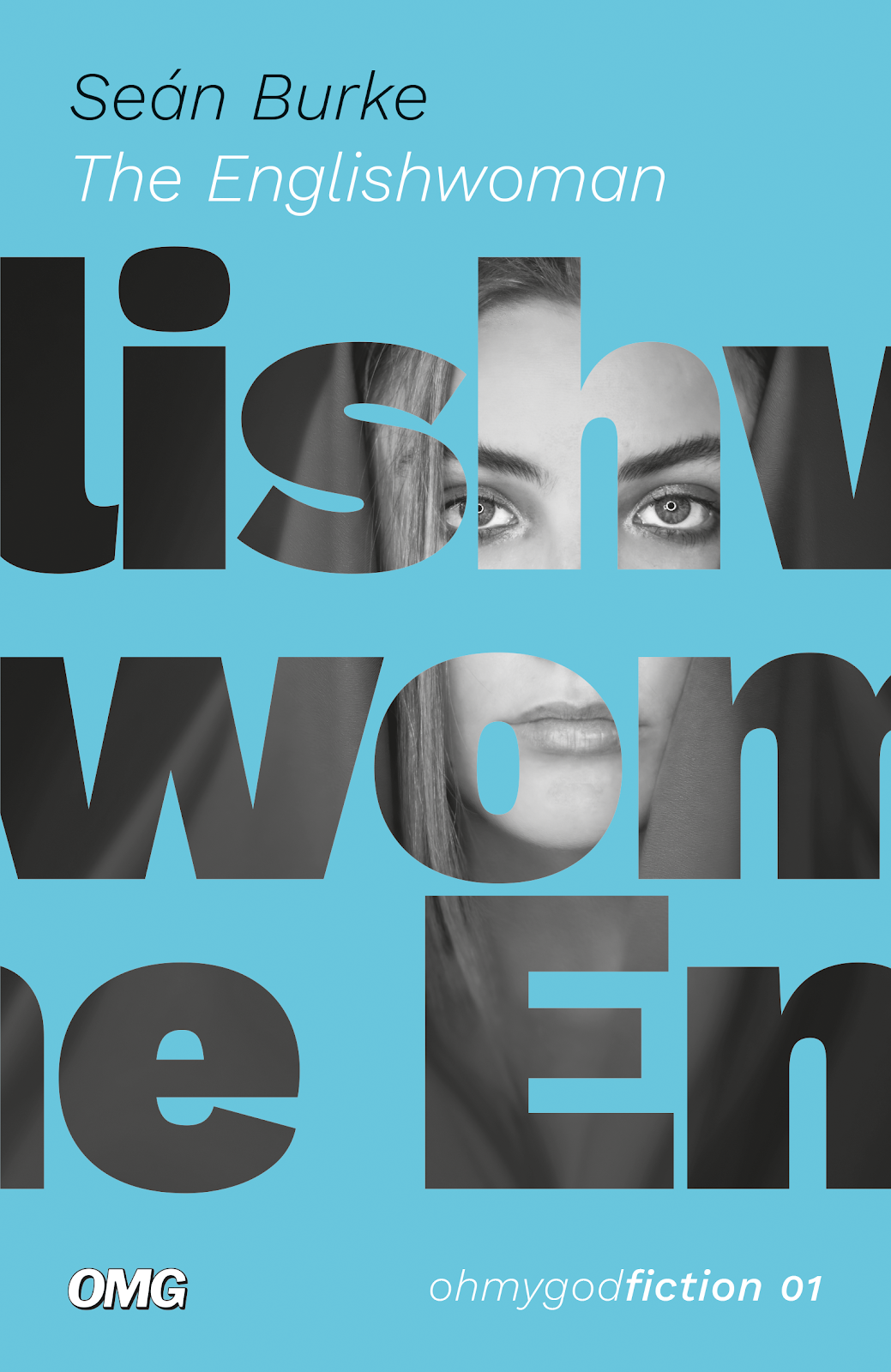
The Englishwoman Is Up To Something

I managed to get back on the recline bike yesterday for the first time since 22/3 which was the first time since 3/3 which in turn was the first since 8/2. A lot of this indolence I am sure relates to the fallout from the months and months of Covid ennui, but for all of that it is hardly Post Traumatic Stress Disorder.

It is just that in these days of Kindle and Audible a recumbent session in the gym is, apart from cookery books in the kitchen, just about the only chance I get, or allow myself to get, to engage with a physical, printed volume.

Sean inscribed a copy of his, then, new novel The Englishwoman for me last December. At the time I was "creeping like a snail" through The Women are Up to Something, and what with my desultory cardio sessions I didn't finish it until March.

As I eased my way back in yesterday I read the first chapter of The Englishwoman, and noticed that I was mentioned in the Acknowledgements. Embarrassing that I hadn't seen that before, but not as embarrassing as corresponding with and seeing Mr Burke for all these months and having to 'fess up that I still hadn't started on his work.

Now I hope we can move on.  The first chapter, cross my heart, is rather good.

Wednesday, December 15, 2021

authorihews

1985

Sean Burke
Doesn't do any work,
But if badgered he
Claims to study theories of tragedy.

2021

Sean Burke
Continues to shirk.
What on earth are we s'posed to be citing
In the years since The Ethics of Writing?

Charles Moore: Torygraph

A clerihew is a well-known form of light verse, invented by Edmund Clerihew Bentley. It is just four lines long, and comprises two rhyming but non-metrical couplets. (His very first one went: “Sir Humphry Davy/Abominated gravy./He lived in the odium/Of having discovered sodium.”)

During Covid, the distinguished historian Sir Noel Malcolm, former political columnist of this paper, went for many long walks. As he walked, he developed a refinement of the clerihew which makes the form stricter. The first couplet must find a rhyme for the name of an author. The second couplet must conclude with the title of one of that author’s works.

Here is an example: “WB Yeats/Liked all the excitement an uprising creates./Yet he was nowhere to be seen/In Easter, 1916.”

Sir Noel calls his new genre “authorihews” (and has just published a little collection of them for Christmas, under that name). I prefer to call them “malcolmicals”.

Part of the fun is the absurdity created by these rhyming rules: “The contribution of Benito Mussolini/ To political theory was teeny./Only his desire to make a splash is some/Explanation of The Doctrine of Fascism.”

I particularly like the second rhyme in this one: “To the eyes of Bram Stoker/ Everything appeared blood-coloured or ochre:/Apparently he was suffering from macular/ Degeneration when he wrote Dracula.”

Monday, November 25, 2013

Knowledge is not for knowing

The bar keep in the 'Nonce has read Sean's book The Death and Return of the Author: Criticism and Subjectivity in Barthes, Foucault and Derrida.

I don't think I have ever been as surprised at anything in my life.

It's a slow Saturday night when you can have a sufficiently discursive conversation with the guy behind the jump for subject of Michel Foucault - French philosopher, historian of ideas, social theorist, philologist and literary critic - to be broached if I'm honest.

Friday, September 04, 2009

Always scribble, scribble, scribble!

When I was back in Cardiff, Sean recommended Robert Bolano's 900 page "2666" and "The Wire" (the five series of which weigh in over 58 hours on 24DVDs).

God knows how I'm going to fit them in to the giddy whirl, but to celebrate the publication of Bolano's posthumous triumph in paperback in the UK today, the following order is winging my way.


Monday, December 22, 2008

Author? Author!

Now a thousand years old Japan's "The Tale of Genji" may be the first modern novel, and yet ...
It took until the 20th century before a complete English-language version appeared. Arthur Waley, a Cambridge classicist who taught himself Japanese and Chinese, produced the first English translation in six instalments between 1925 and 1933. Waley was much more interested in readability than fidelity. He sped up the plot, cut long descriptive scenes and the occasional entire chapter. He clarified many of the sentences, added psychological background to the characters and westernised the Japanese architecture. The result was a prose masterpiece, though one which modern scholars prefer to call an adaptation rather than a translation.

Lytton Strachey, a neighbour of Waley’s, considered his translation “beautiful in bits”, but the reaction from Japan was much warmer. Even if Waley’s Japanese noblemen sound a little like early-20th-century Cambridge undergraduates, one contemporary Japanese writer famously declared that the Englishman had breathed life into a work that had been tottering around like a headless corpse. Indeed, Waley’s stature in Japan is such that Heibonsha, another publisher, recently released a retranslation of Waley’s “Genji” back into Japanese. “Even in the modern-language versions of ‘Genji’, the majority of Japanese readers don’t make it much past the opening chapters,” explains Takao Hoshina, an editor at Heibonsha. “Waley’s is the most accessible version for us too.”
Casting my bread upon the waters, I float this story back to Sean - connoisseur, curator, theoretician and defender of authorship - on the occasion of the tenth anniversary third edition of his major critical study. (I'm in the acknowledgments don'cha know.)


Wednesday, December 10, 2008

Riptide

Sean contributed a story about a flawed stoic and a devil moving implacably to perdition on the Horn of Africa to the second edition of a bi-annual anthology short story collection called Riptide.

He generously inscribed a copy for me when I was in Wales a while back, and I've started working my way through the rest of the book every other day when I do half an hour on the recline bike in the gym.

I'm enjoying it more than I thought I would. Luke Kennard's story is hilarious; one to watch.
Luke Kennard is an award-winning poet, critic and short-fiction writer. He works as a research student and assistant teacher at the University of Exeter. He is an award-winning man. His first award-winning collection of prose poems "The Solex Brothers" was published by Stride Books in 2005 and won an award. He has worked as regional editor for "Succour", a biannual journal of poetry and short fiction based at the University of Sussex and as an associated reader for "The Kenyon Review". He is currently reviews editor of "Exultations and Difficulties". His award-winning poetry has appeared in numerous print and on-line journals. He exists in a permanent state of award-winning; he is like a giant magnet for awards or, if awards are moths, a giant light.His award-winning work for the stage has been written with and performed by the theatre company Pegabovine in Bristol, Birmingham, London, Scarborough (as part of the National Student Drama Festival, 2003 and 2004, wherein it won an award) and at the Edinburgh International Fringe (wherein it did not win an award).

"The Sunday Times" described their work as 'wit of a different order', but did not specify which one. "Chortle magazine" described it as 'delightful' - which is probably less equivocal. He is constantly decorated for his achievements in the form of awards - which he has won, does win and will continue to win, because he is a winner. What a guy. Luke Kennard is tall, nervous, polite and frequently scorches the end of his nose.He was educated at Holyrood Community School and the University of Exeter. He is married and lives in Devon, birthplace of the memorial bench. Essentially a lower-middle class purist, his favourite canape is the cocktail sausage roll. He will probably have rosettes and medals incorporated into his gravestone, somehow. Luke Kennard, award-winner, won an Eric Gregory Award from the Society of Authors in 2005. This has been described as a travesty and a slap in the face for writers of genuine talent. Ever since he has been forced to travel under a false name and wear nose-moustache-glasses for fear of being assaulted by embittered poets, young and old. I suppose he could just smash them in the head with one of his awards.

He was received by the Orthodox church in 2006 and is working on his humility.

Wednesday, October 29, 2008

Nuke Bears

Over dinner on Saturday night, Sean observed that "Welsh born" as a compound adjective should strictly be rendered "Welsh-born". The trouble with that is that not having a double barreled surname (Nicholas Milton-Browne anyone?) good grammar would break my anagram if I changed the title of these spindrift pages.

In my defense it is a nonbasic howler, but given that Nicholas Shearing - senior editor on the new words group of the Oxford English Dictionary - doffs his cap to the Burkemeister, what can I do?

Trusting in your judgement dear readers I have decided to let you vote on my 'blog's title. Choose (if you can be bothered) between "Welsh Born", "Welsh-Born" and some other anagrammatical options below as the question is presented in the great man's authentic voice. (Sorry 'bout quotation marks rendering as gibberish in the question - but I gotta lotta balls in the air just now, and I can't be doing with character encoding conundrums.)


Sunday, October 26, 2008

fun fun fun

I try and write here each day.

I'm just back from Wales. Ben had fun at a party with his cousins on Saturday, and Sean and I managed to meet up over South Indian grub at Punitha's in the evening.

Next day, we went to The Old Barn Inn Charity Horse & Cart Drive (as promoted by my brother), met up with Chris, Kim and Dylan, and then drove all the way back to London with a stopover at my Mum and Dad's in Cardiff.

The end. Goodnight.

Wednesday, February 27, 2008

Wake Up Boilers!

Sean's new book, "The Ethics of Writing: Authorship and Legacy in Plato and Nietzsche" has finally arrived from Amazon which means I will almost certainly end up reading it over our skiing holiday next week and cementing my deserved reputation as the one of the world's leading poseurs.

It's not the first time his publishing schedule has done this to me. Years ago in Cyprus a girl asked me what the large format paperback I was reading as I sprawled on a recliner next to the swimming pool might be. I took a deep breath and announced that it was "The Death and Return of the Author: Criticism and Subjectivity in Barthes, Foucault and Derrida". We never spoke again.

I googled "Sean Burke Plato" looking for reviews and came up with this blog post written by a former student of his. I'm not sure that I recognise the character it portrays, but then again I've known the subject since primary school so we are a long way past shyness.

Thursday, September 06, 2007

Between the sheets (Phnarr Phnarr)

Today is devoted to books.

First off the bat, I've finished Rob's El Grupo recommendation Constantinople: The Last Great Siege, 1453. Obviously I can't write about in detail until we have met to discuss it, but it is full of practical information. On impaling technique for example:
The Grand Turk [makes] the man he wishes to punish lie down on the ground; a sharp long pole is placed in the rectum; with a big mallet held in both hands the executioner strikes it with all his might, so that the pole, known as a palo, enters the human body, and according to its path, the unfortunate lingers on or dies at once; then he raises the pole and plants it in the ground; thus the unfortunate is left in extremis; he does not live long.

Ouch! So now you know Vlad.

Next up, I have ordered this year's books from the Folio Society as I continue to assemble the library of handsome volumes to which I intend to devote my twilight years. The books will be published over the next twelve months. I can't provide links as they aren't on the Society's website yet, but my choices are:
  • Tolstoy's Anna Karenina
  • Best of Saki
  • Shelley: Collected Poems
  • Food in History by Reay Tannahill
Finally, I dropped Sean a line yesterday after discovering that he was implicated in introducing messy, emotional Welsh to the prim and proper Oxford English Dictionary, and learned from the reply that his magnum opus "The Ethics of Writing" is now at proofs. He's split it into two books, and the first has a definite publication date of January 2008.

If you pre-order it via this link - The Ethics of Writing: Authorship and Legacy in Plato and Nietzsche - I get to wet my beak as well via the Amazon affiliates scheme. (I'm not holding my breath.)

It is always good to have the smart as a whip Dr. Burke back in the loop. Far too often with other acquaintances, as my mind wanders while talking to them, I find myself wondering if they might count towards my five vegetables a day .

(If you are an acquaintance reading this, then I obviously don't mean you.)

Tuesday, September 04, 2007

Cwtch

The New Ninja Bomber and I are back in the smoke after a week's cwtch with his cousins, uncles, aunts and grandparents in Legoland and latterly Wales.

Cwtch is evocative for me, as I remember my Mum saying it when I was a little boy. I wasn't sure if I would find any references to it online, but googling I came across this, published in the Western Mail when cwtch ascended to the OED in 2005:

IT'S one of the nation's favourite words, and symbolises that warm feeling that only closeness to a loved one can create.

Exactly.

Later in the article, Nicholas Shearing - senior editor on the new words group of the Oxford English Dictionary - is quoted as saying:
"Our job is to record the language. And we found the word cwtch was turning up more and more.
"Part of the reason is there has been a spate of writing which recognises Welsh-English as a legitimate dialect, such as Sean Burke.
"When a word gets into the dictionary, it reflects people are more
comfortable with using it."

Hooray for Sean, one of my oldest friends, and now it would seem venerable language maven. (I am aware that read literally the sentence I quote does seem to suggest that he is a "spate of writing" or a "legitimate dialect" rather than an exemplar of the authors writing in Welsh-English, but live and let live, pedantry is the last refuge of the second rate.)

Wednesday, May 02, 2007

Clerihews

Sean Burke
Doesn't do any work,
But if badgered he
Claims to study theories of tragedy.

A clerihew I wrote in 1985 when I was knocking round in Edinburgh with the author of Deadwateras well as Authorship: From Plato to the Postmodern and The Death and Return of the Author: Criticism and Subjectivity in Barthes, Foucault and Derridapopped unbidden into my head this morning so I am sharing it with the world.

I get a name check in the preface to "Authorship". How cool is that?

Wednesday, February 01, 2006

San Fermin

The story and footage of the bull jumping into the crowd in Mexico City's bullring sent me back to Chris's pictures of visits to Pamplona's fiesta.

Chris is behind the camera on this one, but Sean and I could well be in the melee. We must have been as mad as hops.

I remember the first time that we ran with the bulls we didn't have a clue what we were doing. We joined the throng that seemed to be awaiting the release and wormed our way through. When we got to the edge Sean creased his brow, pointed down the empty road and asked aloud, "what if the bulls come from that direction?" We insinuated our way back to the centre of the crowd and awaited our fate.

Friday, January 27, 2006

En Las Penas

An unexpected bonus of this blogging lark is that it really helps in maintaining contact with old brothers in arms. I was thrilled yesterday to receive a collection of scanned photos of our early Eighties Pamplona jaunt from Chris of Stuff and Nonsense.

It is a sobering thing to see how much one's appearance changes over the years, so just for the record, the boyband in the central group of the snap above consists of:
  • centre - a slightly disheveled matinee idol, Nick Browne (not what I remembered)
  • right - a ruggedly handsome Chris Howell (not what I remembered)
  • left - a weirdy, beardy Rod McKenna (exactly as I remember).
This by a process of elimination means that the possibly vomiting figure behind my head being addressed by Rod may be John Ashton so Sean is behind the camera or vice versa. Either scenario is equally likely from what I remember of that journey into the heart of darkness.

Thursday, September 01, 2005

What's Welsh for Zen

Back in school - nearly thirty years ago - when Sean, Tim, Dave and I were trying to be a band in the front room of my parent's house on Saturday afternoons, one of the songs we tried to cover was the Velvet Underground's White Light/White Heat. What I wouldn't give to have a copy of our efforts today and hear our virginal adolescent voices quivering through:


Watch that speed freak, watch that speed freak,
G
onna shoot it up every night of the week
Hmm hmm, White heat
Aww sputter mutter everybody gonna go kill their mother

I remember though that, when Sean lent me the album to learn the song, the real revelation for me was hearing John Cale delivering the Gift in his mellifluous Welsh accent.

Inside the package, Waldo was transfixed with excitement that he could hardly breathe. His skin felt prickly from the heat and he could feel his heart beating in his throat. It would be soon. Sheila stood upright and walked around to the other side of the package. Then she sank down to her knees, grasped the cutter by both hands, took a deep breath and plunged the long blade through the middle of the package, through the middle of the masking tape, through the cardboard through the cushioning and (thud) right through the center of Waldo Jeffers head, which split slightly and caused little rhythmic arcs of red to pulsate gently in the morning sun...

To discover that the son of a miner born in 1942 in the small Welsh coal village of Garnant, between Swanse and Camarthen grew up to be a founder of the quintessential New York art band was marvellous beyond words. Later, when I was in Swansea University, my friend Howie - who attended the same secondary school as Cale two decades later - showed me a dog eared textbook that he had kept as a reliquary because the label inside showed that it had once been issued to and initialed by the great man.

He is hereby inaugurated as the latest Welsh Born Icon.

What's Welsh for Zen is the title of the autobiography Cale published a few years ago. There is a great review of it here. (I wonder if Dr Collis is any relation to me.)

In his discussion of his early years, Cale develops some suggestive links between his early musical education and the triumphs and excesses of his later life, which the book charts in pitiless detail. At the time he began learning the piano, for instance, he suffered a series of bronchial attacks and was prescribed Dr Collis Browne's cough medicine, a syrup laced in those days with opium. Here, he conjectures, lies the origin of 'the relationship between music and drugs' which would have him waiting anxiously for his man in the greenroom each night before he could take to the stage. Before one concert, when his parents were in the audience, he was so nervous he snorted chopped-up chalk, given him by his band as a prank, without even noticing.

To be a drugged up rock'n'roller is not unusual - could they all have been on Dr Collis Browne's mixture in their infancy?

Thursday, July 07, 2005

San Fermin

It is the seventh day of the seventh month so the first bulls will have been run this morning in Pamplona. I've been to the festival a couple of times myslef. I think that first time was in 1983 with Sean and Chris.

It is important to realise that you can't outrun a bull. This means that unless you start very close to the bullrung, the beasts are going to come charging past or over you at some stage. The real trouble can come if a bull ever turns and charges the people that it has already passed rather than continuing on to the ring.

You can be assured howevever that you are allowed to carry a rolled up newspaper to protect yourself in extremis.

It really is a unique experience. Bizarely it is most thrilling the first couple of times that you do it when you haven't got the slightest idea what is going on and you half expect a bull to rush out of any doorway.

Thursday, February 24, 2005

Deadwater

I just applied to join Amazon's UK associate scheme.

So if you click on the cover of Sean Burke's fine novel Deadwater and buy it, I should get a share of the proceeds. I already bought four copies myself, one to read and three for friends.
cover

It would be interesting to compare what I get for selling a copy via this site with what Sean makes.